


Iguazu Falls: Brazil Side Travel Guide
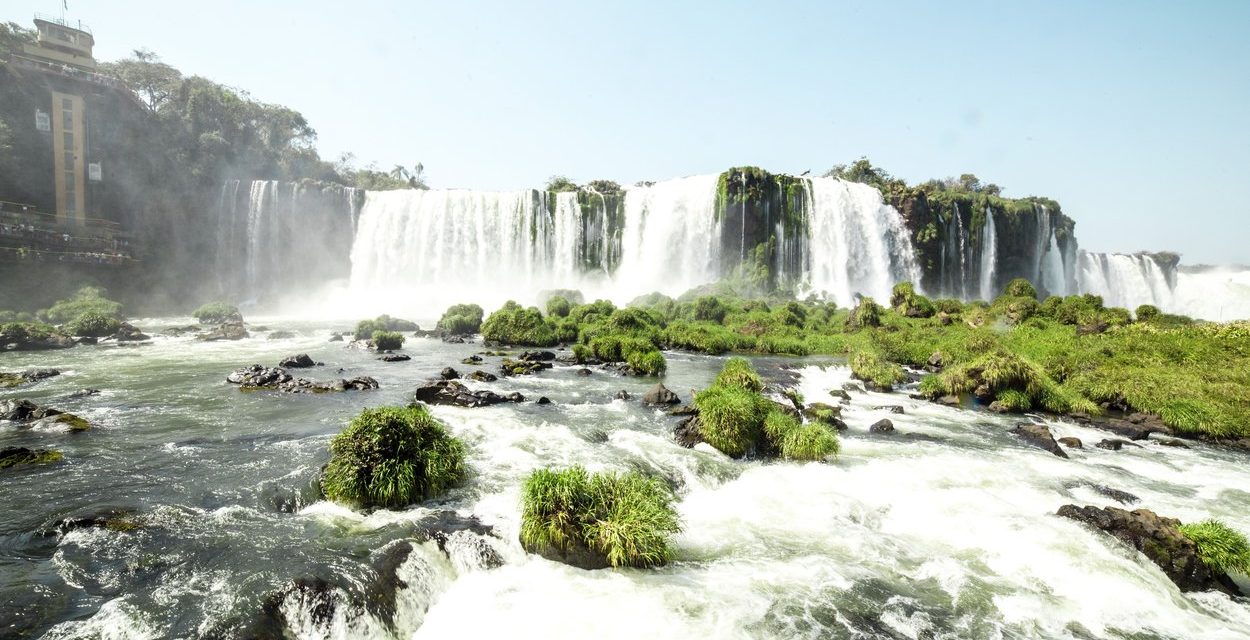
Iguazu Falls sits on the border between Brazil and Argentina, where the Iguaçu River drops over a basalt cliff in a horseshoe nearly 2.7 kilometers wide. The falls split into roughly 275 individual cascades, though that number shifts with the river’s water level, sometimes dropping toward 150 and sometimes climbing past 300.
Most visitors cross into Argentina for the walkways that run right next to the water, but the Brazilian side has a different job. It gives you the one view where you can see most of the waterfall system at once, across the river, from a single park. If you only have a morning or an afternoon to spend at the falls, this is the side built for that.
This guide covers the Brazilian side specifically: Parque Nacional do Iguaçu, how to reach it, what the visit itself involves, and what else sits nearby, from the Macuco Safari boat ride to Parque das Aves, the bird park at the entrance.
Quick Comparison
| Question | Answer |
|---|---|
| Which side gives the panoramic view | Brazil |
| Which side has most of the individual falls | Argentina (estimates range from about two-thirds to 80%) |
| Time needed on the Brazilian side | 1.5-3 hours |
| Nearest airport | Foz do Iguaçu International Airport (IGU) |
| How tickets are sold | Online only, with a scheduled date and time |
| Kids under 6 | Free with photo ID |
Getting to Parque Nacional do Iguaçu
The park sits on BR-469, Km 18, just outside Foz do Iguaçu, in the state of Paraná. Foz do Iguaçu International Airport (IGU) sits only a few kilometers from the entrance, closer to the park than to the city center.
City bus line 120 connects downtown Foz do Iguaçu, the airport, and the park’s Visitor Center, where you check in and board the park’s own internal transport. Fares cost a few reais, paid in cash, though travel guides disagree on the exact travel time between the airport and the park, so build in extra time if you’re cutting it close before a flight. A taxi from the airport or a hotel in town takes less time and typically costs somewhere in the range of R$120 to R$180, depending on the company and the traffic.
The park opens every day of the year. Hours run Monday through Friday from 9 a.m. to 4 p.m., and Saturday and Sunday from 8:30 a.m. to 4 p.m. Arrive early if you want to avoid the midday crowds that build up once tour buses from both countries converge on the Visitor Center.
What You’ll See on the Trail
Your ticket includes a round-trip ride on the park’s own shuttle, roughly 12 kilometers from the Visitor Center to the start of the Trilha das Cataratas, the walking trail that does the actual work of this visit. The trail itself runs about 1 to 1.5 kilometers along the canyon, with paved sections, a few short climbs, and elevators near the end.
The highlight is Garganta do Diabo, the Devil’s Throat, the tallest of the falls at around 80 meters and the point where roughly half the river’s flow pours through. On the Brazilian side, a footbridge takes you out over the water for a view from below and the side, a different angle than the Argentine catwalk that looks straight down into it. Expect to get wet here. A poncho or a dry bag for your phone earns its keep.
Budget 1.5 to 3 hours for the full walk, longer if you stop often for photos or visit during a busy period. As of late November 2026, the park’s main walkway (Passarela das Cataratas) is temporarily closed for maintenance, while the trail and main viewpoints stay open; check the park’s own site for the current status before you go.
Tickets and Prices
Tickets for Parque Nacional do Iguaçu are sold exclusively online, with a specific date and entry time chosen at checkout. You can change your date up to twice before the date you first booked, and you don’t need to print anything: a photo ID and your ticket on your phone are enough at the gate.
There are two official pricing tiers. The Categoria Integral applies to visitors who aren’t Brazilian or from a Mercosul country; Brazilian, Argentine, Paraguayan, Uruguayan, and Venezuelan nationals get a 10% discount off that rate under the Brasil/Mercosul category. Travel guides put the Integral rate at roughly R$130 to R$135 as of late 2026, though the official ticket shop only shows the exact figure at checkout and the price changes, so confirm the current rate before booking. Children up to age 6 enter free with a photo ID; from age 7, everyone pays full price, and the park doesn’t offer a student or senior discount beyond the nationality-based tiers above.
Parking at the official lot is priced separately, at roughly R$64 a day, according to one travel guide. The Macuco Safari boat ride, a separate attraction that takes you by truck and trail down to the riverbank and then by boat toward the base of the falls, is booked and paid for on its own; third-party resellers list a wide range of bundled tour prices, so check the Macuco Safari counter inside the park for its own rate.
Beyond the Falls: Parque das Aves and Other Stops
Parque das Aves, a bird park, sits right next to the entrance, before the Visitor Center, making it an easy add-on before or after your falls visit. It houses toucans, macaws, and other native species in large walk-through aviaries. Its hours have shifted during 2026 between roughly 8:30 a.m. and either 4:30 or 5 p.m., depending on the season, so check its current schedule before you go; guides put the entry fee in the R$80 to R$90 range, with free entry for young children.
Helicopter flights over the falls are sold by a private operator near the park, typically a short panoramic loop over the Brazilian side’s airspace. Treat them as an optional, separately booked add-on rather than a given, since availability and pricing change by season and aren’t published by the park itself.
Should You Visit the Argentine Side Too?
Many travelers base themselves in Foz do Iguaçu or Puerto Iguazú, Argentina, and visit both national parks on separate days, since each side requires its own full-price ticket and its own few hours of trails. The Argentine side, Parque Nacional Iguazú, holds more of the individual falls and a network of catwalks that gets you much closer to the water, including a walkway over Devil’s Throat from above.
Crossing the border for the day means passing through Brazilian and Argentine immigration, and entry requirements depend on your nationality rather than on Brazil’s own rules. If a second-country crossing is part of your plan, confirm Argentina’s current entry requirements for your passport separately, since they don’t automatically match whatever applies to Brazil.
When to Go
Water levels at Iguazu Falls follow the region’s wet and dry seasons rather than a single best month. Wetter months bring more water over every one of the falls, a bigger spectacle but also more spray and sometimes muddier trails. Drier stretches mean calmer water and clearer photos, with a little less drama at Devil’s Throat itself.
Many travelers plan this stop around the Brazilian summer, especially February, when domestic tourism peaks and the park sees its busiest crowds of the year. If your dates are flexible and you’re also planning the rest of your route, the best time to visit Brazil overall doesn’t always line up with what works best for the falls specifically, since rainfall patterns vary a lot by region.
Practical Tips
Bring cash in reais for the bus, parking, and any small vendor near the entrance, since not every stall takes a card; see our guide to exchanging money in Brazil for where to get reais once you land. Wear shoes you don’t mind getting wet, pack a change of clothes or a poncho, and keep your phone in a dry bag or sealed pouch once you’re near Devil’s Throat.
Sun exposure adds up fast on the open sections of the trail, so sunscreen and a hat matter even on a cloudy day. If you’re combining the falls with other stops in Brazil, both the Pantanal and Rio de Janeiro connect through major hubs, so a lot of itineraries treat the falls as a one- or two-night add-on rather than a standalone trip.
FAQs About the Brazilian Side of Iguazu Falls
Is the Brazilian side or the Argentine side better for Iguazu Falls?
The Brazilian side gives you the best panoramic view in a shorter visit, usually 1.5 to 3 hours. The Argentine side has more of the individual falls and closer walkways, but takes a full day on its own.
How long do you need at the Brazilian side of Iguazu Falls?
Most visitors need 1.5 to 3 hours for the Trilha das Cataratas, longer if you add the Macuco Safari boat ride or Parque das Aves on the same day.
Do I need to book Iguazu Falls tickets in advance?
Yes. Parque Nacional do Iguaçu sells tickets exclusively online with a fixed date and entry time, so same-day, pay-at-the-gate access isn’t an option.
Can I visit both the Brazilian and Argentine sides in one day?
It’s possible but rushed, since each park has its own full-price ticket, its own immigration crossing, and several hours of walking. Most travelers split the two sides across separate days.
Is Iguazu Falls worth visiting if I’m short on time?
Yes, especially the Brazilian side, since the main trail and its panoramic views fit into a half day, including travel time from Foz do Iguaçu.
Picking the Brazilian side alone works well if your schedule is tight or Argentina isn’t part of your trip. If you can spare an extra day and the border crossing fits your plans, pairing both parks gets you the wide panoramic view from Brazil and the closeup catwalks from Argentina, two very different ways of looking at the same river.
Photo credit: Tomas Anunziata/Pexels