

Best Time to Visit Brazil
Brazil doesn’t have one best season. It’s bigger than the continental United States, straddles the equator, and holds a coastline, a flooded wetland, and the world’s largest rainforest within its borders. The right month for a beach trip to Rio can be the wrong month for jaguar-spotting in the Pantanal.
Start with the basics: Brazil sits in the Southern Hemisphere, so summer runs December through March and winter runs June through August, the opposite of the United States and Europe. From there, the calendar splits by region and by what you’re going to do.
Quick Comparison by Region
| Region | Best Window | Why |
|---|---|---|
| Rio de Janeiro & the Southeast | April-June or September-November | Mild temperatures, lighter crowds, lower prices than summer |
| Amazon Rainforest | July-December (drier) or January-June (wetter, more flooded access) | Depends on whether you want trails and riverbank wildlife or flooded-forest canoeing |
| Pantanal wildlife | July-October | Low water levels concentrate animals around remaining water sources |
| Iguaçu Falls | March-May or September-October | Strong water flow without the peak heat and humidity of summer |
| Northeast beaches (Salvador, Fortaleza, Natal) | September-March | Drier stretch along most of the coast, though local patterns vary |
| Carnival | Dates move every year | Biggest crowds and highest prices of the whole calendar |
Rio de Janeiro and the Southeast
Rio doesn’t have a sharply defined rainy season the way some tropical destinations do, but it does have a clear temperature swing. February, the peak of summer, averages around 27°C (80°F), while July, the heart of winter, averages closer to 20°C (68°F), according to climate-data.org’s long-term averages.
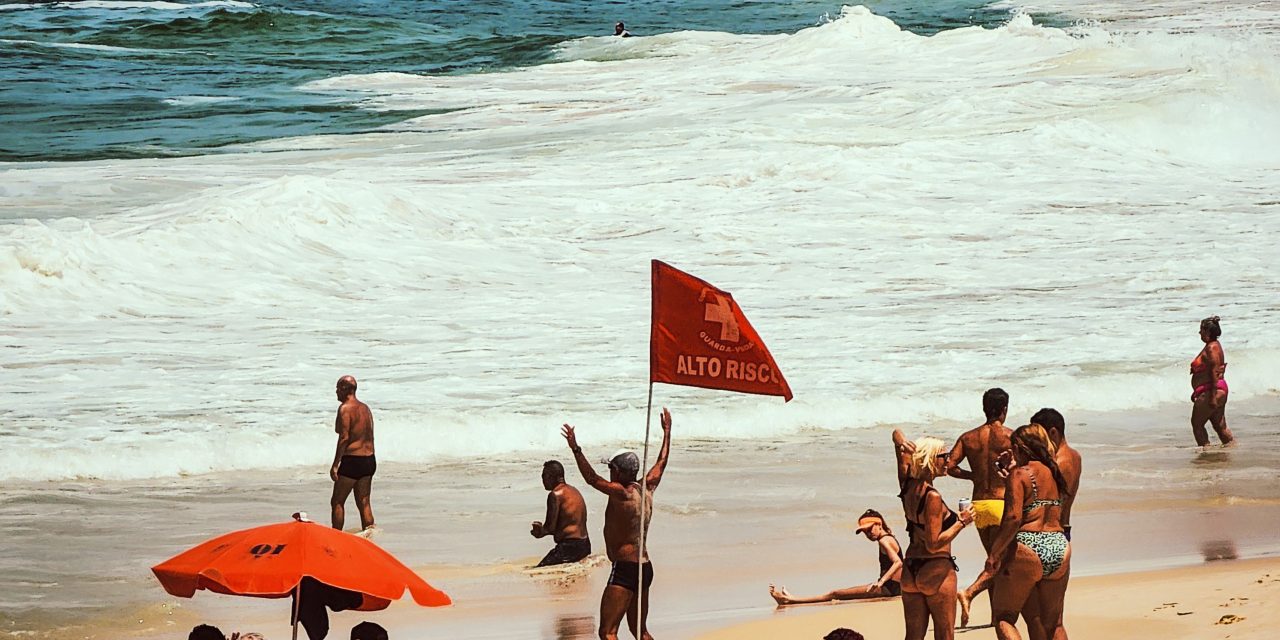
Summer (December through March) is hot, humid, and the most crowded and expensive stretch of the year, driven by Christmas, New Year’s Eve on Copacabana Beach, and Carnival. Winter (June through August) is milder and generally drier, though July is an exception: Brazilian school winter break falls in that month, so hotel prices rise even though the weather doesn’t change much.
The shoulder seasons, April to June and September to November, tend to offer the best trade-off: daytime temperatures around 20-26°C (68-79°F), noticeably fewer tourists, and rates below the summer peak.
The Amazon Rainforest
Rain falls in the Amazon all year. What changes is how much, and that has less to do with “dry” versus “rainy” than with what kind of trip you want.
The drier stretch, roughly July through December, lowers river levels and concentrates wildlife along exposed riverbanks and trails, which makes animals easier to spot on land-based hikes. The wetter stretch, roughly January through June, floods sections of forest and lets boats and canoes reach areas that stay inaccessible the rest of the year, though wildlife is harder to spot from the water than along a dry riverbank. May and June sit in between: past the rainiest months (February to April) but ahead of the hottest, driest ones (September to November).
Neither window is ever truly dry, so pack for rain whichever month you choose.
The Pantanal: Best for Wildlife
The Pantanal, the world’s largest tropical wetland, runs on a flood cycle rather than a simple wet/dry split. From roughly July through October, water levels drop and wildlife clusters around the water sources that remain, which is why this window draws the most visitors looking for jaguars, caimans, and birdlife. The Cuiabá River in the northern Pantanal is a particularly well-known spot for jaguar sightings in this period.
From around December through March, seasonal flooding covers much of the land. Spotting animals on foot gets harder, but boat-based trips into flooded channels become more productive, and the region is quieter since fewer travelers visit.
Iguaçu Falls
Rain falls across the river basin that feeds Iguaçu Falls all year, with no clearly defined dry season, and flow depends on conditions upstream rather than the local forecast. December through March, the wettest and hottest stretch, usually brings the highest water volume and the most dramatic falls, along with the most heat, humidity, and crowds of the year. Some walkways close during unusually high water in this period.
March, April, and September tend to offer a middle ground: water levels still high enough for a strong show, with more comfortable temperatures than the summer peak. August and September run drier and noticeably cooler, better suited to hiking the surrounding trails than to seeing the falls at maximum force.
Northeast Beaches: Salvador, Fortaleza, Natal
The Northeast coast runs drier than most of Brazil for a large part of the year, broadly September through March for cities like Fortaleza and Natal. Some sources cite over 300 sunny days a year for the stretch further north along Ceará and Rio Grande do Norte. Salvador is the exception travel guides disagree on most: some describe its driest, most festival-friendly stretch as June through September, which overlaps with the wet season further north, so check conditions for the specific city rather than treating the whole coast as one block.
Carnival: The Date That Moves Every Year
Carnival follows the Christian calendar, 47 days before Easter, so it lands on a different date each year. In 2027, the core celebration runs February 6 to 9, with Rio’s Sambadrome parades on February 7 to 9 and the Champions’ Parade the following Saturday, February 13.
Whatever year you’re planning around, Carnival drives hotel rates and flight prices to their highest point of the entire calendar, in Rio especially. Book accommodations at least three to four months ahead if your trip falls anywhere near Carnival week.
When Prices Are Lowest
Outside Carnival and the December-to-March summer peak, May, June, September, and October are generally the cheapest months to visit Brazil, since they fall outside both the summer crowds and the July school-holiday bump. July itself is a trap for budget planning: the weather is mild almost everywhere, but domestic school vacations push demand and prices higher.
FAQ
When is Carnival in Brazil in 2027?
The core celebration runs February 6 to 9, 2027, with Rio’s main Sambadrome parades on February 7, 8, and 9.
What’s the cheapest time of year to visit Brazil?
May, June, September, and October, broadly. July has mild weather in most regions but higher prices because of Brazilian school winter break, and December through March carries the highest demand of the year.
Is Rio de Janeiro hot year-round?
No. Rio swings from an average of about 27°C (80°F) in February to about 20°C (68°F) in July, roughly a seven-degree gap that makes winter feel genuinely cooler.
When’s the best time to see jaguars in the Pantanal?
Roughly July through September, when the dry season concentrates wildlife around the water that’s left, especially along the Cuiabá River in the northern Pantanal.
Does Iguaçu Falls ever run low on water?
Yes, more often in the drier months around August and September. The falls never dry up, but the flow is noticeably less dramatic than during the wet summer months.
There’s no single calendar that works for all of Brazil at once. Match the month to the region: shoulder-season weather for Rio and the Southeast, the dry months for Pantanal wildlife, and a clear eye on the Carnival date, whether the goal is to catch it or steer well clear of its crowds and prices.
Photo credit: Willian Santos/Pexels